
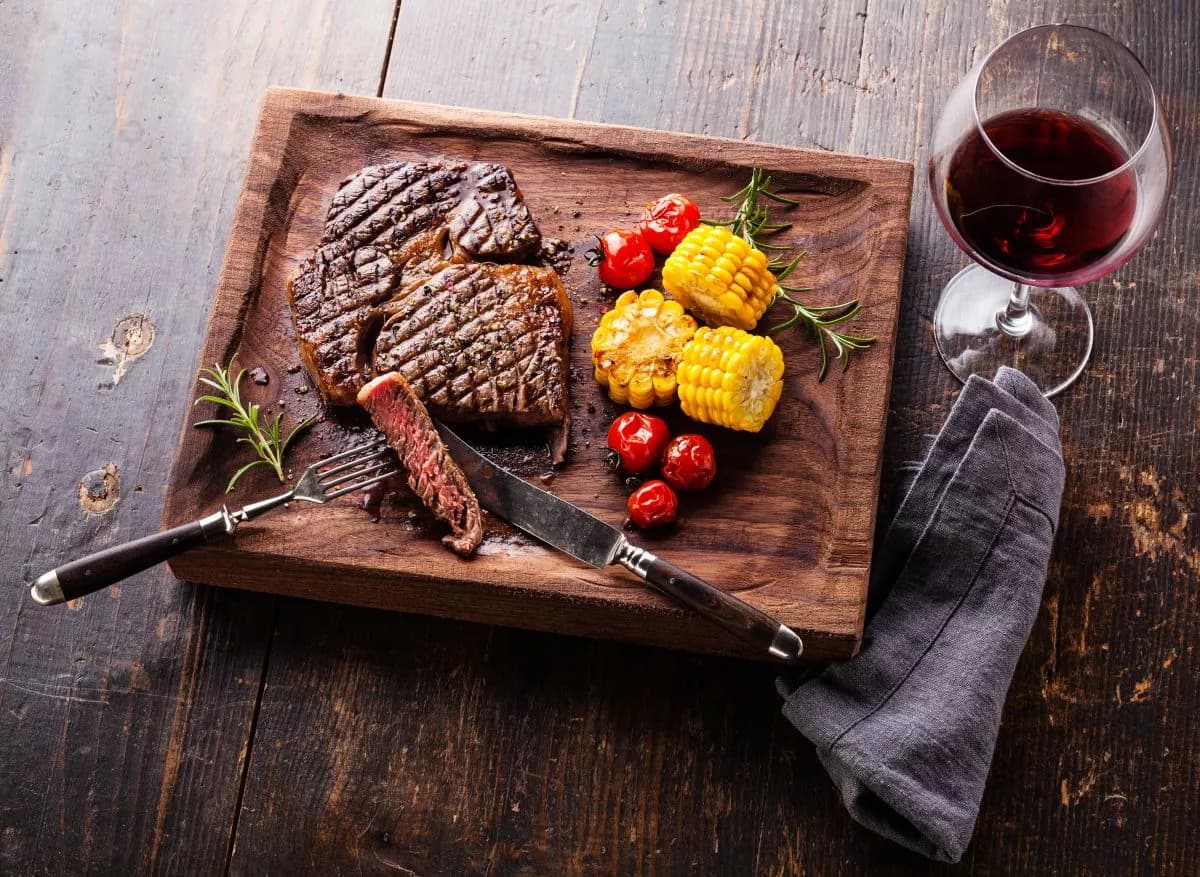
Let's be real: a Brazilian churrasco without wine still works, but it's like going to the beach and never touching the water. You can do it, but why skip the full experience? Beer is a classic, no shade there — but wine is what takes the whole thing up a notch, building layers of flavor that turn a Saturday cookout into something people actually remember.
And no, you don't need to be a sommelier or memorize a bunch of French château names to get it right. Pairing wine, at its core, is just basic chemistry: fat wants acidity, protein wants tannin, sweet wants sweet (or sweeter). Once you get the logic, the rest is just style.
We put together a full roadmap — from the starter spread to dessert — using bottles available right now in our catalog. Let's go. 👇
Round 1: The starter spread — cheese, salami, olives
Every good churrasco has that pre-game moment: the charcuterie board hitting the table while the coals are still catching. Cheese, salami, olives, maybe some cured ham. It's salt, it's fat, it's intensity — and this is exactly where most people mess up, cracking open the heaviest red in the house and torching their palate before the meat even shows up.
The right move for kickoff is sparkling wine. There's real technique behind this: the bubbles and acidity act like a palate reset — they cut through the fat of the salami and cheese, clean your mouth out, and get you ready for the next bite. It's basically the opposite of weighing the meal down; it sharpens your appetite instead.
For this job, go with V8+ Prosecco DOC Brut. It's got a solid backstory: born inside the Valdo Spumanti group, founded in 1926 right in the heart of Veneto — the birthplace of Prosecco. It's made from the Glera grape using the Charmat method (fermentation happens in steel tanks, not the bottle, which locks in that bright, fruity freshness). A young, playful sparkling wine, zero pretension required — exactly the vibe you want to open the party.
If your board leans more toward fresh cheese and less toward salty cured meats, a crisp white also works great: Bricco Cortese Di Gavi DOCG 2023, made with the Cortese grape in Gavi, Piedmont — a region known for producing one of Italy's most mineral, citrusy whites. It's an almost obvious match with soft, fresh cheeses.
Why it works: acidity + bubbles vs. fat + salt = balance. Chemistry wins again.
Round 2: Heavier charcuterie (cured salami, ham, semi-aged cheese)
If your starter table leans more rustic — cured Italian salami, ham, semi-aged cheese — switch to a rosé with some body. It keeps the acidity a white gives you, but adds fruit and structure to stand up to bolder cured meats without fighting them.
Here we're going with Dos Fincas Malbec Rosé 2022, from Viña Amalia, out of Uco Valley in Mendoza — one of the highest, coolest wine regions in the world for Malbec, which gives it more freshness and less alcoholic weight than you'd expect from an Argentine grape. It's a great bridge wine, connecting the lighter starter to the main event coming up next.
Round 3: The main event — the actual barbecue 🥩
This is where the real party happens. And here's the truth: "churrasco" isn't one single dish — picanha, ribs, sausage, and lamb each call for something different. Let's break it down.
Picanha, ribs, and premium grilled cuts
Grilled red meat, with good fat content and that smoky char, wants a medium-to-full-bodied red with present tannin (to "hold" the fat on your palate) and enough acidity to keep the wine from feeling heavy.
The classic pick — and this isn't a trend, it's terroir science — is Viña Amalia Malbec 2020. Malbec's history with grilled meat is basically a soap opera: the grape originated in Cahors, southwest France, but was brought to Argentina in 1868 by French agronomist Michel Pouget. There, in Mendoza's altitude and sun, it found the perfect conditions to develop soft tannins and ripe, almost jammy fruit — which pairs almost poetically with grilled meat. It's basically a wine "made" for the barbecue, before Brazilian churrasco as we know it even existed.
For a lighter-on-the-wallet option to pour freely all afternoon, Dos Fincas Malbec 2024 does the same job with a more straightforward, fruit-forward profile.
Sausage and mixed grill
Grilled sausage has a different profile: less structural fat, more seasoning, smokiness, and sometimes a little spice kick. It calls for a round, easy-drinking red without aggressive tannin — otherwise it fights the seasoning.
Manz Platônico Tinto 2018, a Portuguese blend of Aragonêz, Castelão, and Touriga Nacional, fits perfectly here. It's a Portuguese red with good balance between fruit and acidity and a long finish — but never heavyweight, so it doesn't steamroll the sausage's seasoning.
For those who want to go big: full-on barbecue with a serious wine
If your cookout is more of a real event — fattier cuts, lamb, smoky sauces — you can level up with a proper Piedmontese red. Bricco Barbera D'Asti DOCG 2020 has naturally high acidity (a signature of the Barbera grape) that cuts through fat without losing body — perfect for fattier ribs.
And if you're in the mood to open "the good bottle" as the afternoon winds down: Bricco Barolo DOCG 2019. Made from 100% Nebbiolo grapes in Piedmont — a region with a winemaking history dating back to the 15th century — Barolo has historically been called "the wine of kings, the king of wines." It's tannic, complex, ages beautifully, and wants meat with plenty of fat and flavor to balance its structure. A perfect way to close out the main course in style.
The technical logic behind all of this: red wine's tannin binds to the protein and fat in meat, softening the sensation in your mouth — that's why red meat and red wine are the most classic pairing in wine. Not a stuffy rule, just how your mouth actually works.
Round 4: Dessert — because a good barbecue ends sweet 🍫🍦🍍
This is the moment most people forget to pair, which is a shame, because it's where you can create the biggest "wow" of the whole day.
Chocolate pudding and dark chocolate
Chocolate is tricky: if the wine is lighter or less sweet than the dessert, it disappears in your mouth and turns sour or bitter. The golden rule is simple — the wine needs to be at least as sweet, and just as intense, as the dish.
The star here is Costa Arente Amarone Della Valpolicella DOCG 2018. Its production process is practically legendary in Italian winemaking: Corvina, Rondinella, and Molinara grapes are harvested and then dried for months on straw or bamboo mats, a process called appassimento. The water evaporates, sugar and aromas concentrate, and the result is a full-bodied red at 16.5% ABV, with notes of stewed fruit, raisins, and chocolate. It's not a traditional sweet dessert wine, but its concentration and ripe fruit intensity create the perfect counterpoint to bitter cocoa — pairing by matching intensity, literally.
Vanilla ice cream, pineapple, and fresh fruit
Here everything flips: cold, creamy desserts or tropical fruit (pineapple especially) want freshness, not weight. Back to sparkling wine — but this time the rosé version, with an extra touch of red fruit.
V8+ Prosecco DOC Brut Rosé Millesimato 2022 delivers exactly that: fine bubbles, acidity that cuts through the ice cream's creaminess, and fruity notes that speak directly to the natural sweetness of pineapple. A light, refreshing finish that won't weigh down the table after a big lunch.
The roadmap, in one table
| Moment | What's on the table | Recommended wine |
|---|---|---|
| Starter | Cheese, salami, olives | Brut sparkling or crisp white |
| Heavier charcuterie | Cured salami, ham, semi-aged cheese | Full-bodied rosé |
| Barbecue (premium cuts) | Picanha, ribs, grilled cuts | Argentine Malbec |
| Barbecue (mixed) | Sausage, seasoned cured meats | Round Portuguese red blend |
| Barbecue (go big) | Fattier cuts, lamb | Barbera or Barolo |
| Dessert (chocolate) | Pudding, dark chocolate | Amarone della Valpolicella |
| Dessert (fruity/creamy) | Ice cream, pineapple | Rosé sparkling |
At the end of the day, pairing isn't a rigid rulebook — it's about understanding that acidity cleans, tannin adds body, and sweetness balances sweetness. Once that clicks, you're ready to build out any table, not just a barbecue.
And if you're still on the fence, take our Pairing Quiz — four quick questions and we'll point you to the right bottle for your dish. 🍷