
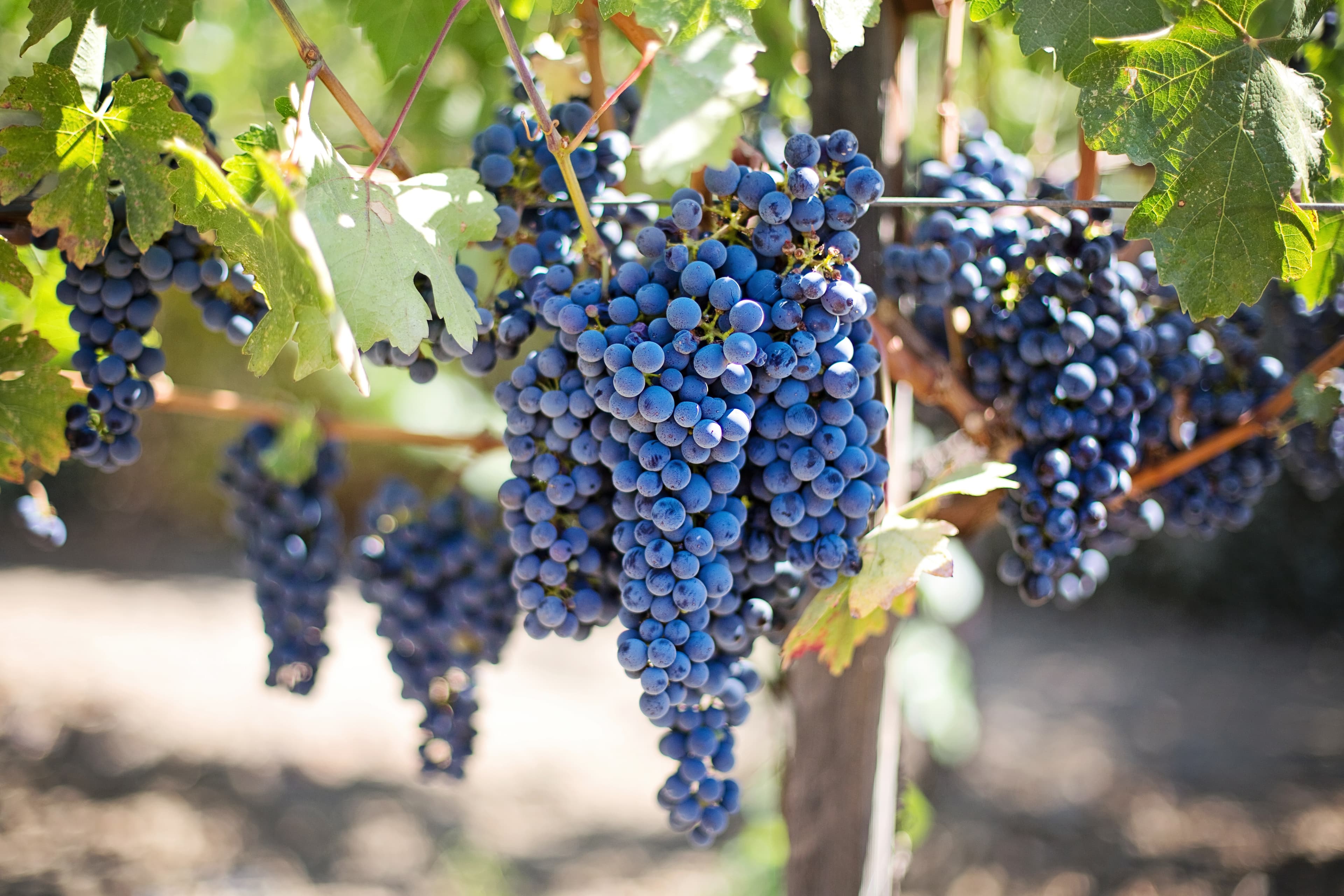
If Portugal had to choose a single grape to introduce itself to the world, it would be Touriga Nacional. It is in the best reds of the Douro and the Dão, it is a key player in Port wine, and it shows up more and more in rosés and even in sparkling wines. Small, dark and full of personality, it is one of the most respected red grapes on the planet.
Where it comes from
Touriga Nacional is a variety of the species Vitis vinifera, the same as all the great European wine grapes, such as Cabernet Sauvignon, Malbec and Pinot Noir. It is native to Portugal, and most scholars point to the Dão region, in the center of the country, as its cradle. From there it moved to the Douro, where it found its most famous home.
For a long time it nearly disappeared. After phylloxera, the pest that destroyed Europe's vineyards in the late 19th century, growers favored more productive grapes. Touriga Nacional gives small clusters, tiny berries and very little yield per vine, which was no use to anyone who wanted quantity.
The turning point came in the 1970s, when studies in the Douro compared the traditional varieties and identified Touriga Nacional as one of the best for Port wine. With clonal selection work in the following decades, yields became more consistent, and the grape returned to the heart of Portuguese wine.
What the grape is like and what it gives the wine
What could have been a flaw, the low yield, is precisely the secret of its quality. Small berries with thick skins mean a lot of color, aroma and structure concentrated in very little juice.
- Unmistakable aroma: its trademark is violet, an intense floral perfume. Alongside it come black fruits (blackberry, plum, cassis), sometimes bergamot, and notes of wild herbs such as rosemary and rockrose (esteva).
- Color: deep, almost opaque.
- Firm tannins and good acidity: this is what gives Touriga Nacional wines their enormous aging potential.
- Climate: it loves heat and sun but keeps its freshness, which is why it adapts so well to the slopes of the Douro and the plains of the Alentejo.
Today it is planted across almost all of Portugal (Douro, Dão, Alentejo, Lisboa, Tejo) and it has traveled too: there are vineyards in Australia, South Africa, Spain and even Brazil.
What wines are made with Touriga Nacional
1. Dry reds, on its own or in a blend
It can be bottled on its own (as a varietal), but it shines in lotes, as the Portuguese call blends. In the Douro, the classic combination is with Touriga Franca, Tinta Roriz (the Spanish Tempranillo, called Aragonez in the south) and Tinta Barroca. In the Alentejo and Lisboa it joins Aragonez, Castelão and Syrah.
- To get to know it: Manz Penedo do Lexim and Manz Lisboa Reserva Tinto, from the Lisboa region, fruity and easy to love.
- Classic Douro: Quinta do Portal Colheita Tinto and Pipo 9 Douro Reserva, with Touriga Nacional and Touriga Franca.
- Alentejo: Monte da Raposinha Reserva Tinto.
- To cellar and celebrate: Quinta do Portal Grande Reserva Tinto, Maria Antonieta, Lágrima Furtiva and Manz Douro Reserva Colecionador.
The result: reds with intense color, floral and black-fruit aromas, firm tannins and a long finish. Young, they are vibrant; with a few years in the bottle, they develop notes of spice, leather and tobacco.
2. Port wine
It is one of the five grapes considered the best for Port wine (along with Touriga Franca, Tinta Roriz, Tinta Barroca and Tinto Cão) and, for many producers, the noblest of them all. It gives color, structure and that perfume that lasts for decades.
- Ruby and LBV (intense red fruit): Quinta do Portal Fine Ruby Porto and Porto LBV 2018.
- Tawny (aged in barrel, with notes of caramel and nuts): Old Tawny 10 Years, 20 Years and 30 Years.
3. Rosés
The pigmented skins and floral aroma make Touriga Nacional an excellent grape for rosés: beautiful color, perfume and freshness. Try the Quinta do Portal Muros de Vinha Rosé, the Colheita Rosé and the Ensaio #II Rosé.
4. "White from red grapes" sparkling wine
By pressing the grapes gently, without letting the juice stay in contact with the skins, you can even make a white sparkling wine from Touriga Nacional, known as Blanc de Noirs (we explain this trick in White wine from red grapes). The Ensaio #V Blanc de Noir Brut Nature is a rare and delicious example.
What it pairs with
- Young reds: grilled meats, gourmet burgers, pasta with ragù, sausage pizza.
- Reserva reds: roast lamb, goat, oven-roasted ribs, aged cheeses such as Parmesan and aged goat cheese, roasted salt cod with batatas ao murro (smashed roast potatoes).
- Port: Tawny with egg-based sweets, nuts and crème brûlée; Ruby with dark chocolate and blue cheeses.
- Rosés: salads, grilled fish, sushi, summer snacks.
Serving tip: reds at 16 to 18 °C; reserva wines will thank you for 30 minutes in a decanter. Rosés at 8 to 10 °C. Port at 12 to 16 °C.
In short
| Touriga Nacional | |
|---|---|
| Species | Vitis vinifera |
| Origin | Portugal (Dão), made famous in the Douro |
| Typical aroma | Violet, blackberry, plum, bergamot, herbs |
| Styles | Dry reds, Port wine, rosés and Blanc de Noirs sparkling wine |
| Aging potential | Excellent in reserva reds and in Ports |
Want to taste it? Browse all our wines made with Touriga Nacional and our selection of Portuguese wines, with delivery in Curitiba and the surrounding area. And if you'd like to discover other grape varieties, read Grapes and their roots.
Please drink responsibly. Sale prohibited to anyone under 18.